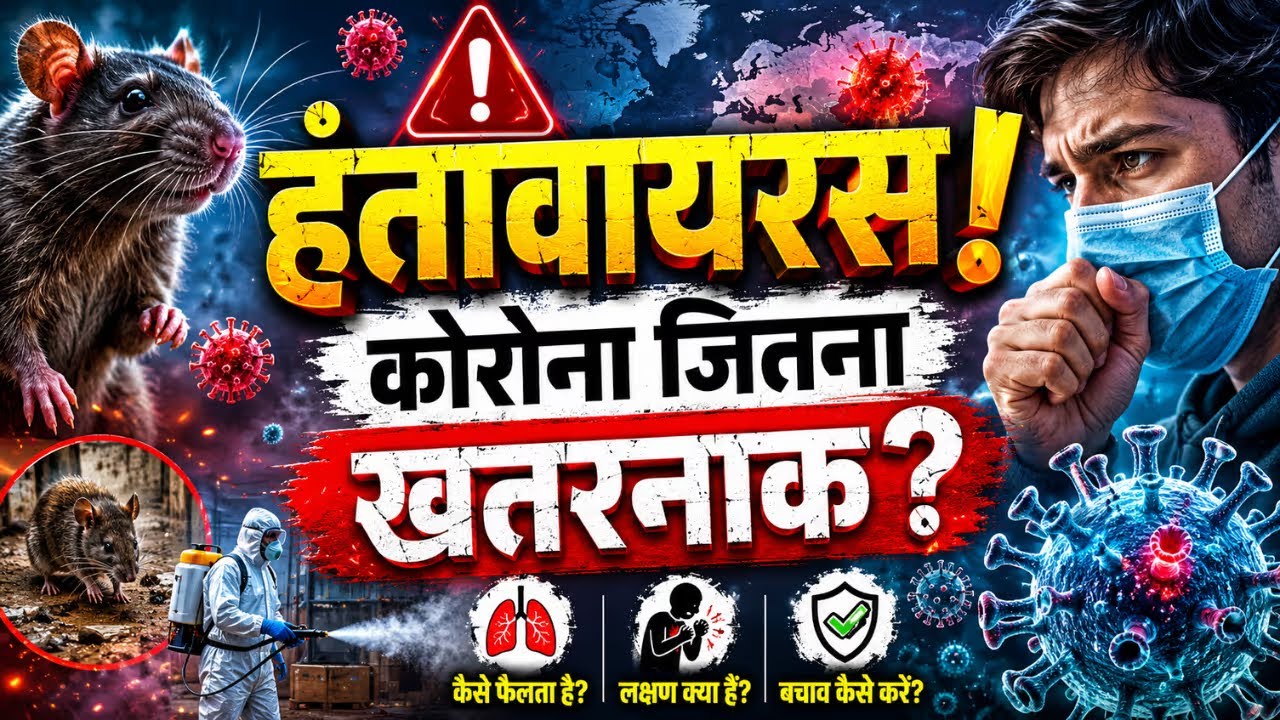
हंतावायरस अलर्ट 🚨 क्या फिर महामारी आएगी?
After COVID-19, is the world facing the threat of another virus? Over the past few days, Hantavirus has suddenly been in the headlines, raising concern and confusion among people. In this video, we explain what Hantavirus is, how it spreads, its symptoms, and whether India needs to worry, all in simple and easy language. Hantavirus is not a new virus. It has existed for decades in different parts of the world. According to World Health Organization and Centers for Disease Control and Prevention, this virus primarily spreads from rodents such as rats and mice to humans. The virus spreads through rodent urine, saliva, and droppings. When people clean areas like closed rooms, warehouses, farms, basements, or old houses where infected rodents live, contaminated dust can become airborne and enter the body through breathing. A key question is whether Hantavirus spreads from human to human. Health agencies say that most types of Hantavirus do not spread between humans. However, a rare strain found in South America, known as the Andes virus, has shown limited human-to-human transmission. Recently, cases linked to this strain were reported on a ship, following which monitoring and quarantine measures were implemented under WHO guidelines. Experts clearly state that Hantavirus is not considered a fast-spreading airborne pandemic like COVID-19. Infection usually requires prolonged close contact in specific conditions. Early symptoms may look like common flu, including fever, fatigue, muscle pain, headache, nausea, and vomiting. In severe cases, the condition can worsen into Hantavirus Pulmonary Syndrome (HPS), where fluid builds up in the lungs, causing breathing difficulties. According to CDC data, severe respiratory cases can have a mortality rate of around 38%. Another form found in Europe and Asia is Hemorrhagic Fever with Renal Syndrome (HFRS), which mainly affects the kidneys. Currently, there is no specific approved vaccine or cure for Hantavirus. Treatment is supportive and includes oxygen therapy, fluid management, and intensive medical care. The most important question: Should India panic? At present, there is no evidence of widespread or rapid human transmission in India. Health agencies are actively monitoring the situation. Experts advise awareness and precaution, not fear. Stay informed, take preventive measures, and avoid spreading panic or misinformation.


